
Your First Orthodontist Consultation: What to Expect Step by Step
By Smile Orthodontics Team12 min read
At your first orthodontist consultation, a specialist will examine your child's teeth and jaw, take digital X-rays or 3D scans, and recommend treatment options like braces or Invisalign. The appointment typically lasts 30-60 minutes (smilebar.com), is often complimentary, and ends with a clear treatment plan and cost estimate.
What Happens During a First Orthodontist Consultation
Most families arrive at the first orthodontic consultation unsure of what to expect. The good news: nothing uncomfortable happens. No treatment starts that day. The visit follows a predictable four-step sequence, and both parents and teens leave with clear answers.
You also do not need a referral to schedule. Any parent can call an orthodontic office directly and book a consultation, no dentist referral required. This removes a common barrier that delays treatment unnecessarily.
The appointment follows this structure:
Step 1: Patient Intake and Medical History Review
Before the orthodontist enters the room, a treatment coordinator greets your family and walks you through the process. Staff collect dental and medical history forms, so complete these online in advance if the practice offers them. Insurance information is verified at check-in, giving you an accurate benefits estimate before any clinical discussion begins. Arrive 10-15 minutes early to handle paperwork without feeling rushed.
Step 2: Clinical Examination and Digital Imaging
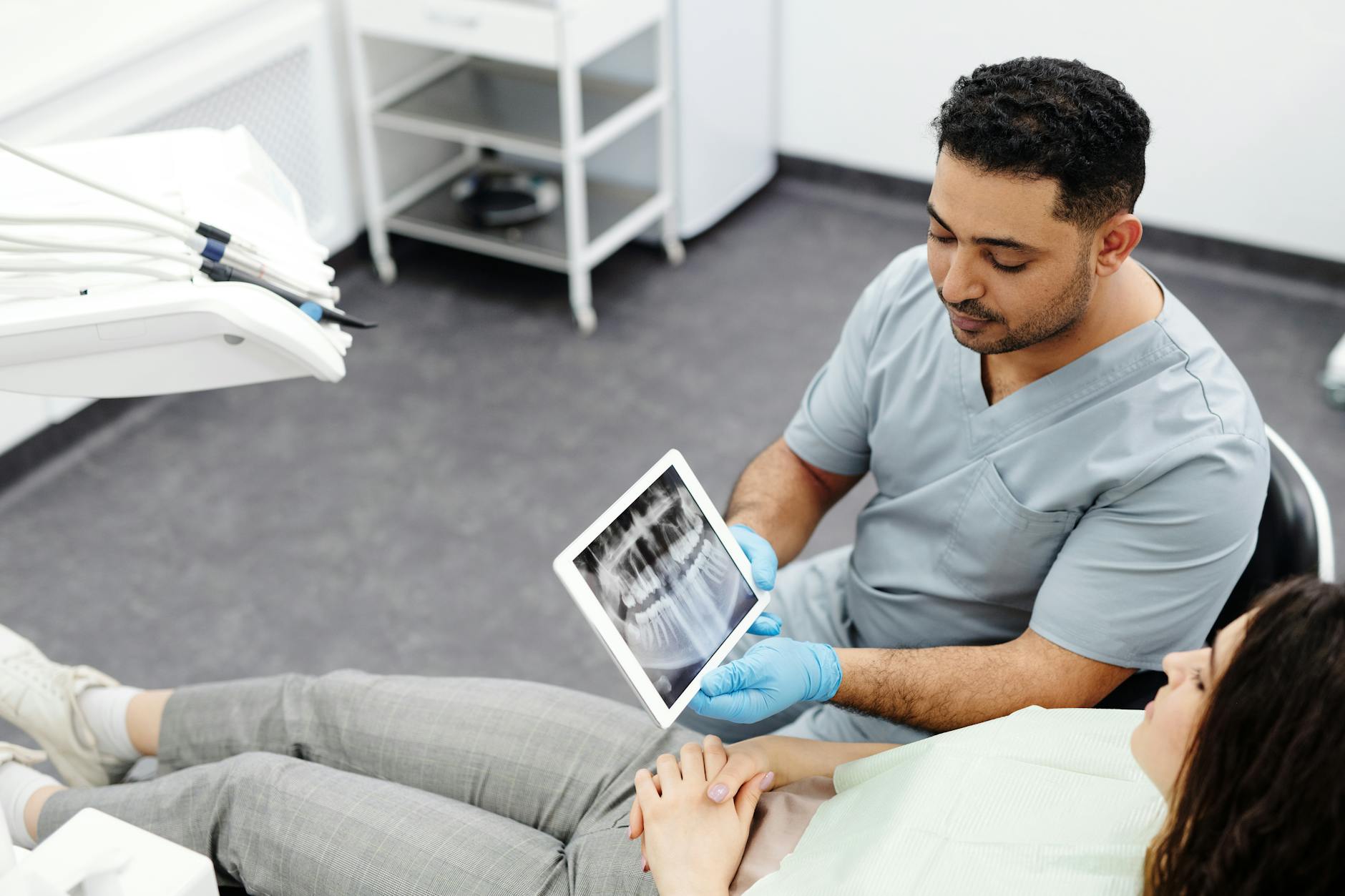
The orthodontist manually examines your child's teeth, gums, jaw joints, and facial structure. Panoramic X-rays capture all teeth, including unerupted ones, which is especially important for teens still losing baby teeth. Many practices now use iTero or similar 3D intraoral scanners to create a precise digital model of the mouth in minutes. No uncomfortable putty molds. Photographs of the face and teeth are taken for treatment planning and progress tracking.
Step 3: Treatment Recommendation and Plan Presentation
The orthodontist presents recommended treatment options, often more than one, and explains the reasoning behind each. For teens, the conversation typically covers traditional braces versus Invisalign Teen. Treatment duration is shared at this stage. Most teen cases run between 12 and 30 months depending on case complexity, jaw development, and patient compliance. The treatment coordinator then reviews cost and payment options before you leave.
Braces vs. Invisalign: How the Orthodontist Decides What to Recommend
This is where most consultations deliver real value. The orthodontist is not arbitrarily picking a product. The recommendation follows clinical logic based on specific case factors.
Complexity drives the decision. Traditional braces remain the most effective option for severe crowding, significant bite correction, and complex tooth movements. They apply continuous pressure in three dimensions, which aligners cannot always replicate for certain rotations or vertical movements.
For moderate alignment issues and teens with the maturity to wear aligners 20-22 hours per day, Invisalign Teen is a strong option. It includes compliance indicators and extra replacement aligners built into the package to account for teen habits like losing or damaging trays.
Ceramic (tooth-colored) braces offer a middle ground. Less visible than metal brackets, but still fixed to the teeth. Teen athletes and musicians often have specific considerations: contact sport players may prefer aligners for mouthguard compatibility, while brass and woodwind musicians typically adapt faster to aligners than to fixed brackets.
Key Factors That Influence the Treatment Recommendation
Four factors carry the most clinical weight:
- Severity of crowding or spacing, Mild to moderate issues are usually aligner-friendly. Severe crowding often requires braces for controlled movement.
- Bite problem type, Overbites, underbites, crossbites, and open bites each respond differently to treatment mechanics. Some bite corrections require the precise control that only brackets and wires provide.
- Stage of jaw and facial growth, Teens who are still growing offer a treatment window that allows the orthodontist to guide jaw development. This window closes in adulthood.
- Compliance and lifestyle, Aligners require discipline. If your teen forgets to put them back after meals, treatment stalls. Ask the orthodontist directly how they assess compliance readiness.
At Smile Orthodontics, our team has found that parents who ask "why are you recommending this specific option?" leave the consultation with far stronger confidence in the plan. Push for that explanation. You deserve a clinical reason, not a brochure.
Cost, Insurance, and Payment Plans: What to Expect Financially
This section covers what most orthodontic websites refuse to address clearly. Know the numbers before you sit down.
Orthodontic treatment in the US varies widely based on case complexity and treatment type. Metal braces tend to fall at the lower end of the range. Invisalign and ceramic braces typically cost more. Your specific quote will reflect your child's case, not a national average.
This applies once per lifetime, not per treatment. However, orthodontic benefits are not universal, so verify your specific plan before the visit.
FSA and HSA funds can pay for orthodontic treatment. This is a tax-advantaged way to reduce out-of-pocket cost many families overlook.
This makes the monthly cost manageable without involving a third-party lender.
Questions to Ask About Cost Before You Leave the Office
Do not leave without answers to these:
- What does the quoted fee include? Ask specifically whether retainers are included after treatment ends.
- Are there fees for broken brackets or lost aligners? Understand the cost of common teen mishaps before they happen.
- What happens if treatment takes longer than estimated? Some practices charge extra; others include extended treatment in the original fee.
- Is there a sibling discount or family plan? If multiple children need orthodontic treatment, this can meaningfully reduce total cost.
- Can you provide a written itemized treatment contract? Never commit without seeing the full breakdown in writing.
Compare total out-of-pocket cost, not just the monthly payment, when evaluating offices. A lower monthly payment stretched over more months may cost more overall.
How to Prepare Your Teen (and Yourself) for the Consultation
Preparation is not just logistical. Mental preparation matters just as much. Here is what actually helps.
Before the appointment:
- Brush and floss thoroughly. The orthodontist examines teeth up close.
- Bring your dental insurance card and a list of current medications.
- Request recent X-rays from your general dentist. If they are current, the orthodontic office may not need to retake them, reducing cost and radiation exposure.
- Write down your questions beforehand. The consultation moves quickly, and it is easy to forget what mattered most.
Preparing your teen mentally: Reassure your teen that nothing painful happens at this appointment. No needles. No brackets being placed. This is a conversation and an exam. Involve them in the discussion during the consultation, not just afterward. For example, consider a 15-year-old who has been self-conscious about their bite for years but dreads the thought of metal braces affecting their appearance during high school. When the orthodontist walks them through the iTero 3D scan showing exactly how their teeth will move, explains that Invisalign Teen offers a nearly invisible option, and lets them see the realistic timeline, that teen shifts from anxious to empowered. They go from seeing orthodontics as something being done to them to seeing it as their choice, which dramatically increases their willingness to wear aligners 20-22 hours daily and follow care instructions. Teens who feel heard during the decision-making process show higher compliance with treatment later. This is not a small thing. A teenager who owns the decision is more likely to wear their aligners consistently or follow bracket care instructions.
Consider this scenario: a 13-year-old who is embarrassed about their crowded front teeth but anxious about "getting braces." Letting them ask the orthodontist directly about Invisalign, look at the iTero scan of their own teeth on screen, and hear the treatment timeline in a calm setting transforms the visit from something scary into something they want to do. That shift in mindset is worth more than any clinical preparation.
Top Questions Parents Should Ask at the Consultation
- Is my child's jaw still growing, and does that affect the timing of treatment?
- What happens if we wait 6-12 months before starting?
- How often will we need to come in for appointments, and how long are they?
- What are the consequences if my teen does not wear their aligners consistently?
- How do you handle emergencies like a broken bracket or a lost aligner?
The American Association of Orthodontists recommends that children have their first orthodontic evaluation by age 7 (aaoinfo.org). At this age, the first permanent molars and incisors have usually emerged, giving the orthodontist enough to evaluate bite development, spacing, and jaw growth patterns. Early evaluation does not always mean early treatment. Sometimes the recommendation is simply to monitor and return in 1-2 years. But catching issues like severe crowding, crossbites, or skeletal discrepancies early can simplify and shorten future treatment significantly.
What Comes After the Consultation: Next Steps Toward Starting Treatment
You are never pressured to commit at the first appointment. Take the time you need.
If you decide to proceed, the timeline moves faster than most families expect. Braces placement or the delivery of your first set of aligners typically happens 2-4 weeks after the consultation. During that window, the practice finalizes treatment records, including photographs, X-rays, and digital scans, and orders any custom appliances or aligner trays. For Invisalign cases, the digital scan is sent to Align Technology and trays are manufactured and shipped before the start appointment.
Treatment timelines range from 12 to 30 months depending on case severity. Mild spacing or crowding cases often resolve closer to the 12-month end. Complex bite corrections or cases requiring skeletal guidance take longer. Your orthodontist will give you a specific estimate based on your child's records, not a generic range.
Inform your child's general dentist that orthodontic treatment is starting. Oral hygiene becomes more complex with brackets or aligners, and regular cleanings every 6 months are essential. Some dentists increase cleaning frequency to every 4 months during active orthodontic treatment.
Red Flags to Watch for When Choosing an Orthodontist
Not every practice operates with the same standards. Watch for these warning signs:
- Pressure to sign a contract or pay on the same day as the consultation
- No board-certified orthodontist on staff, general dentists can place braces but are not orthodontic specialists, having completed an additional 2-3 years of post-doctoral residency training
- Vague answers about what is included in the quoted fee
- Limited availability for teen-friendly appointment times like after school or Saturdays
- No clear protocol for handling orthodontic emergencies like broken brackets or lost aligner trays
Results speak louder. Choose a practice where the orthodontist takes time to explain, not just recommend.
Frequently Asked Questions
Is the first orthodontist consultation free?
Many orthodontic practices offer a complimentary first consultation, but policies vary. Call the office before scheduling to confirm. Some practices charge a diagnostic fee that may be applied toward your treatment cost if you proceed. Always ask what is included in the visit so you are not surprised at checkout.
How long does an initial orthodontist appointment take?
An orthodontist consultation usually takes 30-60 minutes. That time includes patient intake, clinical examination, digital imaging, and a treatment discussion. Bring the full hour so you are not rushed during the cost and payment portion of the conversation, which is often the most useful part.
At what age should a child have their first orthodontist visit?
The American Association of Orthodontists recommends an initial evaluation by age 7. By this age, enough permanent teeth have emerged to assess bite development, jaw growth, and spacing issues. Early evaluation does not always lead to immediate treatment. It often results in a monitoring plan and a scheduled return visit.
Will my child need X-rays at the first orthodontist appointment?
Yes, X-rays are standard at the first consultation. Panoramic X-rays show all teeth, including those still developing beneath the gumline. If your general dentist has taken recent X-rays, bring a copy or ask them to send records in advance. The orthodontist may be able to use existing images and skip retaking them.
Can my teen start treatment on the same day as the consultation?
Some practices offer a same-day start, particularly for Invisalign cases where a digital scan can be taken immediately. However, braces placement typically happens 2-4 weeks after the consultation, once treatment records are finalized and any required appliances are ordered. Do not feel pressured to commit or start on the same day.
Does insurance cover the first orthodontist consultation?
Coverage for the initial consultation depends on your specific plan. Some dental insurance plans with orthodontic benefits cover diagnostic records and the consultation fee. Others do not. Bring your insurance card to the appointment. The practice's benefits coordinator will verify your coverage and give you an accurate out-of-pocket estimate before treatment begins.
What is the difference between an orthodontist and a dentist who offers braces?
Orthodontists complete dental school plus an additional 2-3 years of accredited orthodontic residency training. They specialize exclusively in tooth movement, bite correction, and jaw alignment. General dentists can legally place braces but do not have the same depth of specialty training. For complex teen cases involving bite issues, a board-certified orthodontist is the appropriate provider.
How do I know if my child needs braces or Invisalign?
The decision depends on the severity of crowding or spacing, the type of bite problem, your teen's stage of jaw growth, and their ability to wear aligners 20-22 hours per day consistently. The orthodontist will explain the clinical reasoning at the consultation. Ask directly why one option is preferred over another rather than accepting a recommendation without explanation.
How long does orthodontic treatment typically take for teenagers?
Treatment timelines for teens generally range from 12 to 30 months. Mild crowding or spacing cases often resolve in 12-18 months. Moderate to complex bite corrections and cases involving jaw guidance or significant tooth movement take longer. Your child's specific estimate is based on clinical records, not general averages, so ask for a case-specific projection.
Sources & References
Related Posts

7 Signs Your Child Needs to See an Orthodontist (And When to Act)
Not sure if your child needs braces? From crowded teeth to jaw clicking, there are clear warning signs that an orthodontic evaluation is overdue. This guide breaks down the 7 most important signs orthodontists look for — and explains what happens if they go untreated.
13 min read
How Much Do Braces Cost in 2026? A Complete Price Guide
Braces costs in 2026 range from $3,000 to $10,000 depending on the type of treatment, your child's case complexity, and your location. This guide breaks down every cost factor—from metal braces to Invisalign Teen—so you can plan confidently and ask the right questions at your consultation.
15 min read

Invisalign vs Traditional Braces for Teens: Which Is Right for Your Child?
Choosing between Invisalign and traditional braces for your teen is one of the biggest orthodontic decisions you'll make. This detailed comparison covers cost, comfort, treatment duration, and which option works best for different case types — so you can walk into your consultation fully informed.
15 min read